
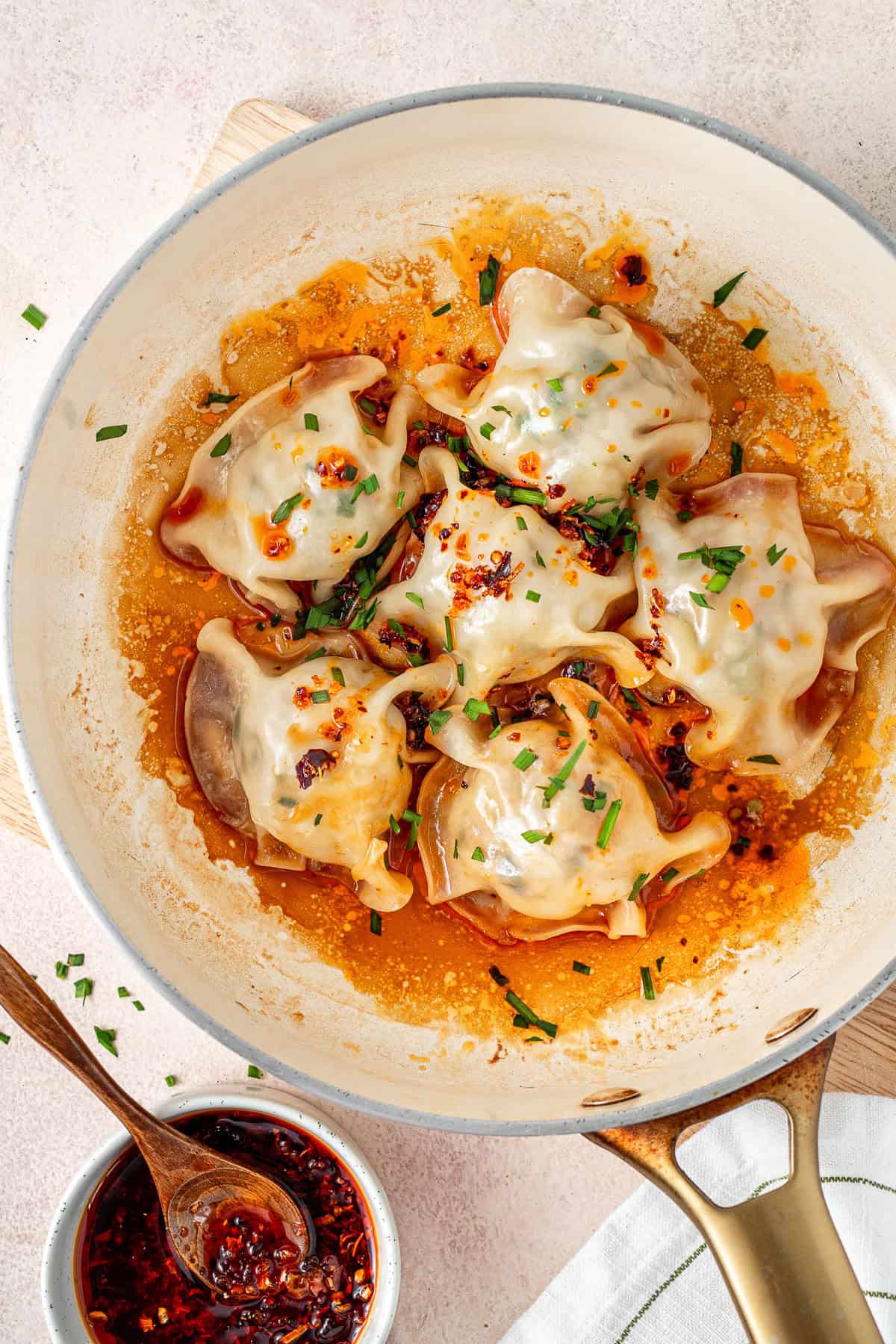
This is my version of the viral no fold dumplings! You have probably seen this genius hack on TikTok where you can create delicious homemade dumplings, without the hassle of folding and wrapping. Just layer the wrapper over balls of filling in a pan like a blanket and steam. Skip the takeaway and give these a try instead!
Now, I’m not one to jump on every viral recipe trend I see on social media, but when something looks genuinely good and I can picture myself actually making it on a regular Tuesday night (like these hot honey beef bowls), I’m absolutely giving it a go.
These no fold dumplings, also known as blanket dumplings, definitely fall into that category. As soon as I saw them I knew I was going to have to create my own version.
The concept for these dumplings is very simple, instead of carefully wrapping the filling, the dumpling wrappers are just draped over balls of filling which are pan fried and then steamed. While they are a little more difficult to eat, they provide the same flavour and experience as a traditional dumpling in a fraction of the time.
Dumplings are one of my favourite takeaway orders, but they can be quite expensive. So these are a great option to enjoy at home in a way that is still doable when you’re feeling tired and on the fence about ordering in, but would rather save the money.
Key Ingredients
These no fold dumplings are made using my favourite pork and chive mixture, which gives them that classic dumpling flavour that will honestly rival any takeaway or store-bought option. The ingredient list is simple and very pantry-friendly.
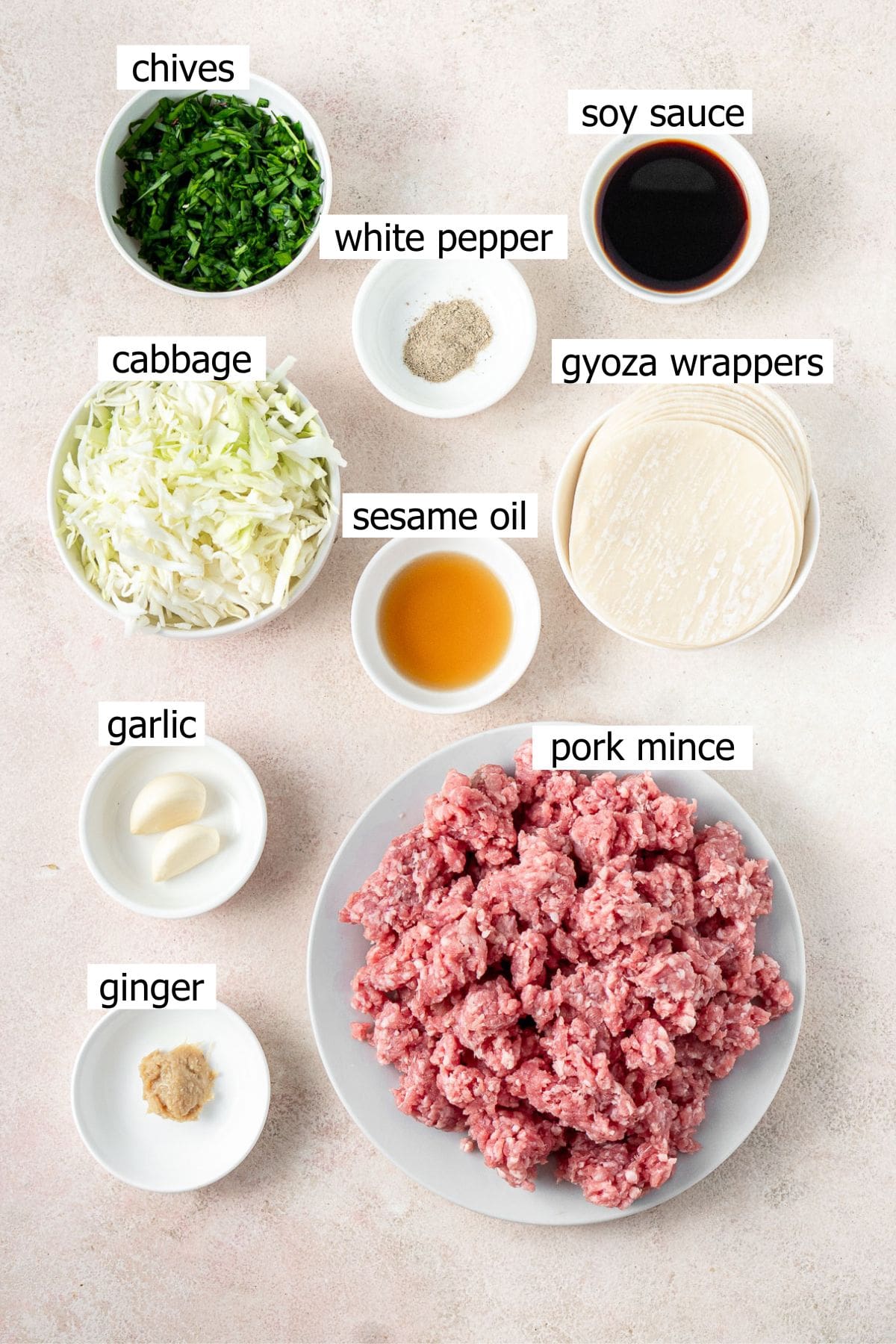
Note all ingredients and their quantities are laid out in the recipe card at the bottom of this post.
- Pork mince – I love to use ground pork as it gives that traditional dumpling flavour and is very budget friendly. You could also use ground chicken if you prefer.
- Garlic chives – this variety of chives is what you’ll find in most pork and chive dumplings. They have long, flat leaves and a more pronounced flavour than regular chives. If you can’t find them, regular chives will work fine, just expect a slightly milder taste.
- White cabbage – use any variety you like, just make sure it’s nice and finely shredded so you don’t get any big chunks.
- Ginger and garlic – fresh is great, but jarred works perfectly well for convenience.
- Soy sauce and sesame oil – essential to give the pork mixture flavour.
- White pepper – using white pepper instead of black pepper to season the filling gives the dumplings a more authentic flavour.
- Gyoza wrappers – for the best results, look for round wrappers rather than square wonton wrappers. You can usually find them in the fridge section at the supermarket (mine are next to the fresh pasta). Otherwise any Asian grocery store will have them.
You’ll Also Love: Prawn Wontons with Chilli Oil
Step-By-Step Instructions
The best part about this dumpling recipe is that you don’t need any special equipment. As long as you have a non-stick pan with a tight fitting lid, you’re good to go!
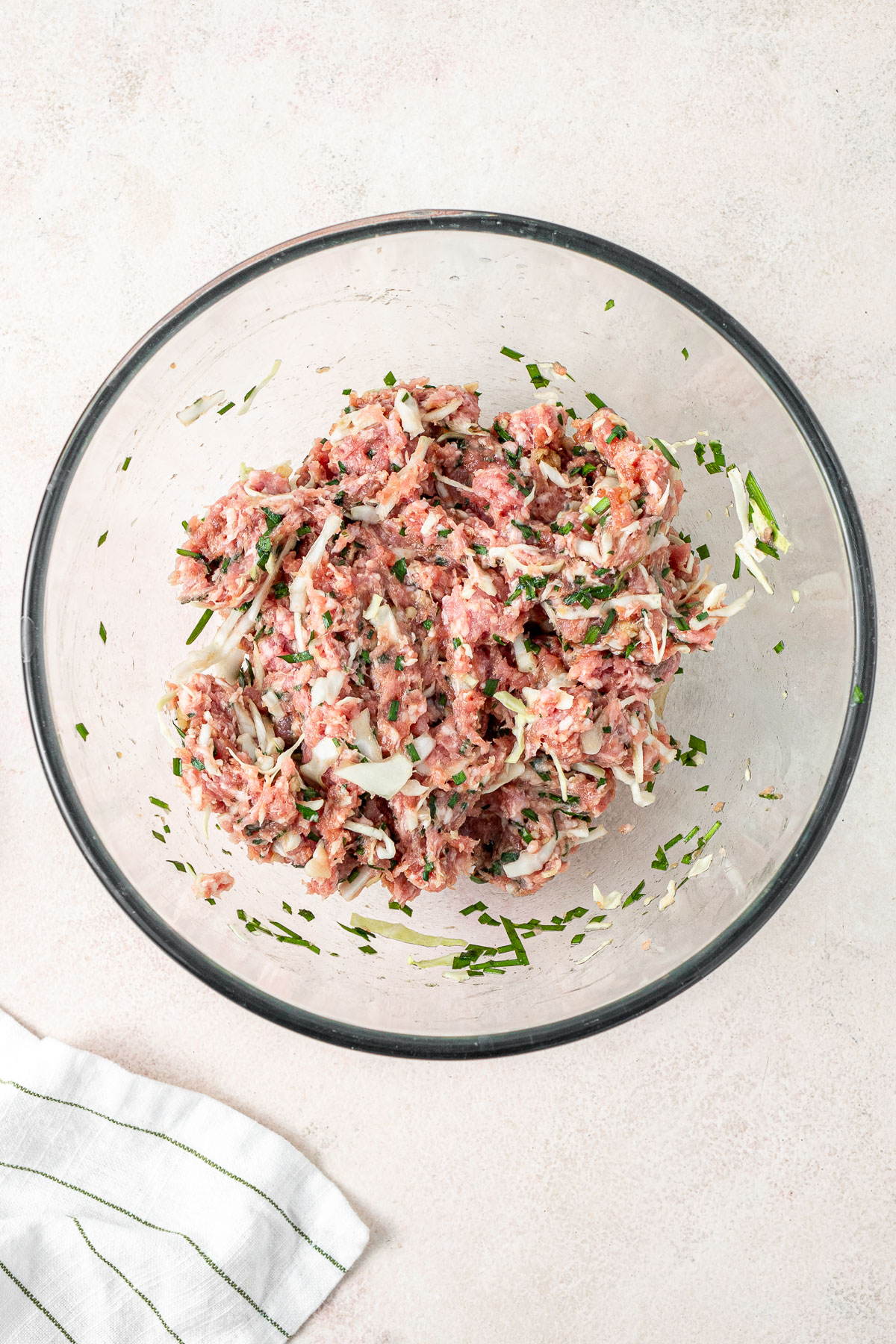
Step 1: Add all of the filling ingredients into a bowl and mix really well for a couple of minutes until the mixture is sticky and holds together.
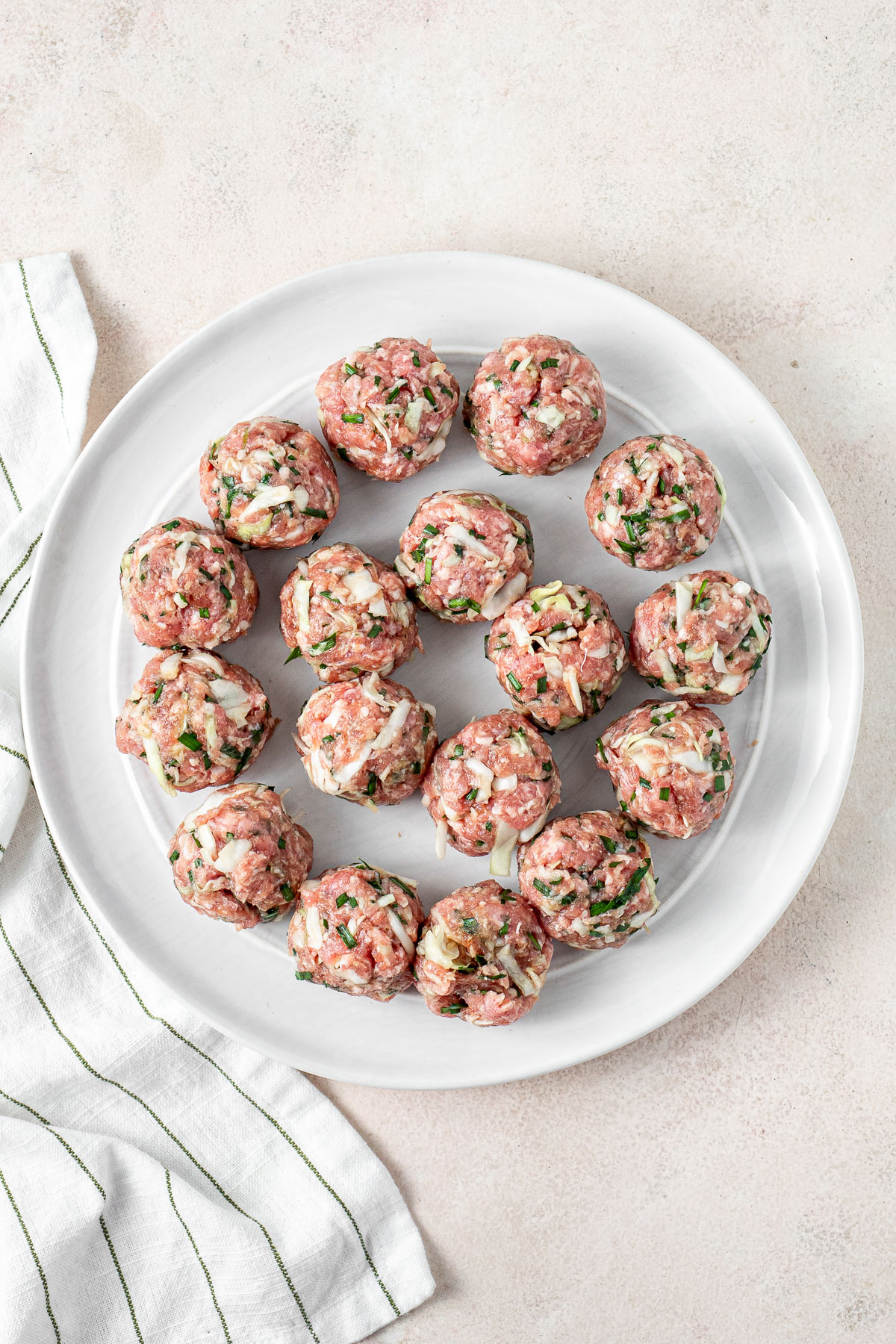
Step 2: Roll the pork mixture into golf ball-sized balls — you should get about 20. Set aside on a plate.
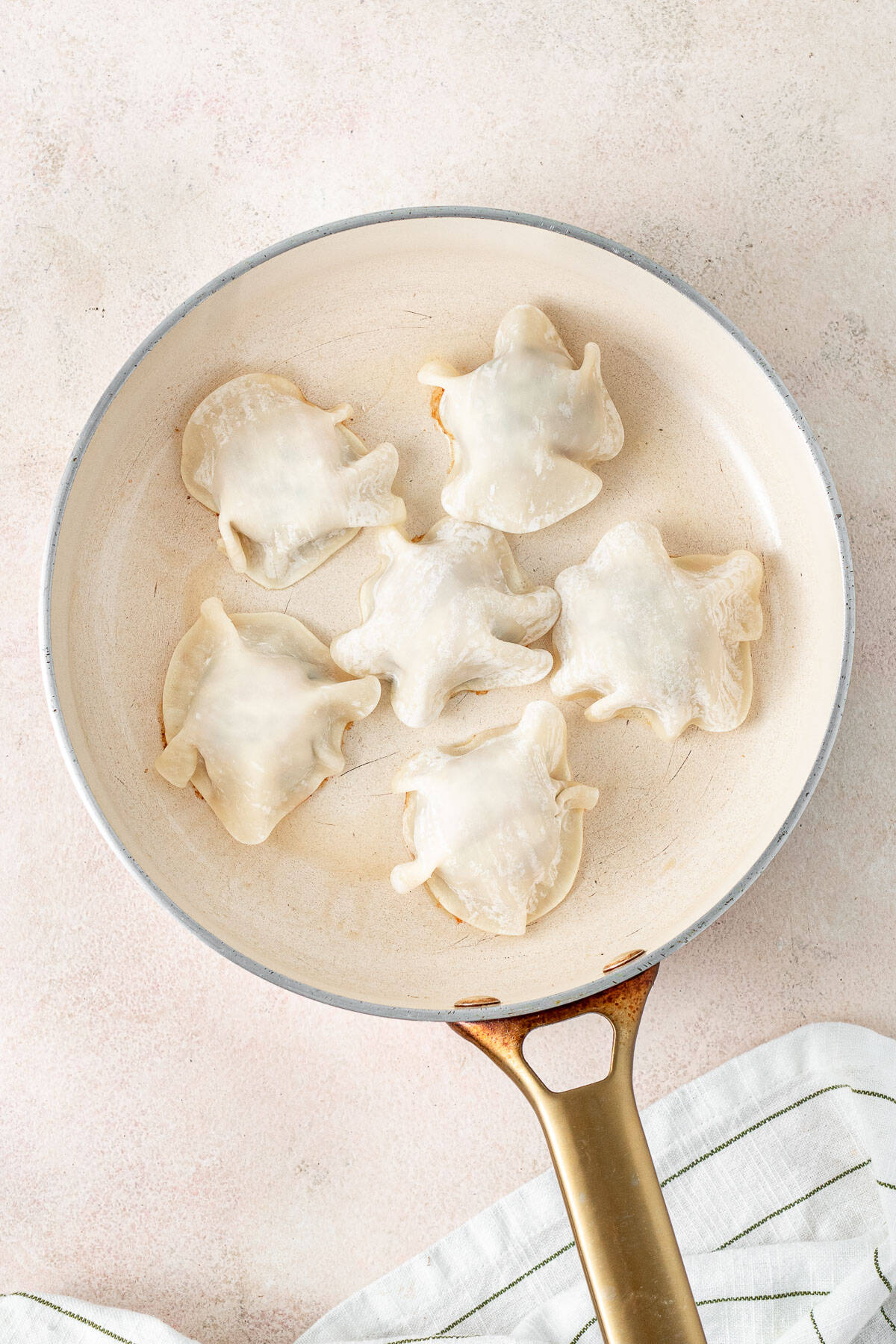
Step 3: Heat a little oil in a non-stick pan over medium-high heat. Place your balls in the pan and leave them alone for 1–2 minutes until the bottoms are just golden. Drape a gyoza wrapper over each ball and press it gently around the sides.
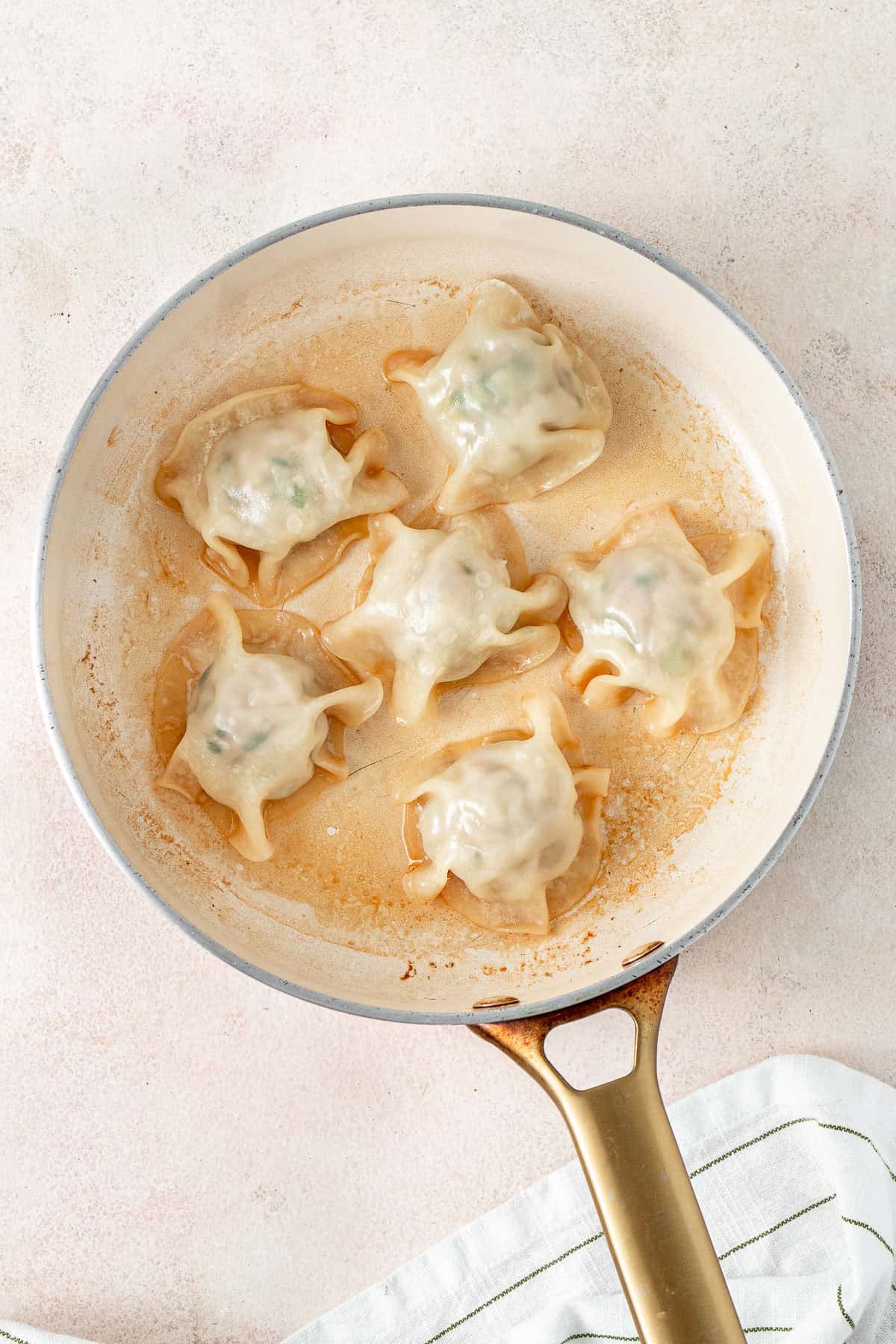
Step 4: Pour a splash of water around the edges of the pan, pop the lid on, and steam for 6–8 minutes. Once the water has evaporated and the wrappers look cooked through, you’re done. If there’s still water in the pan, cook uncovered for another minute or two.
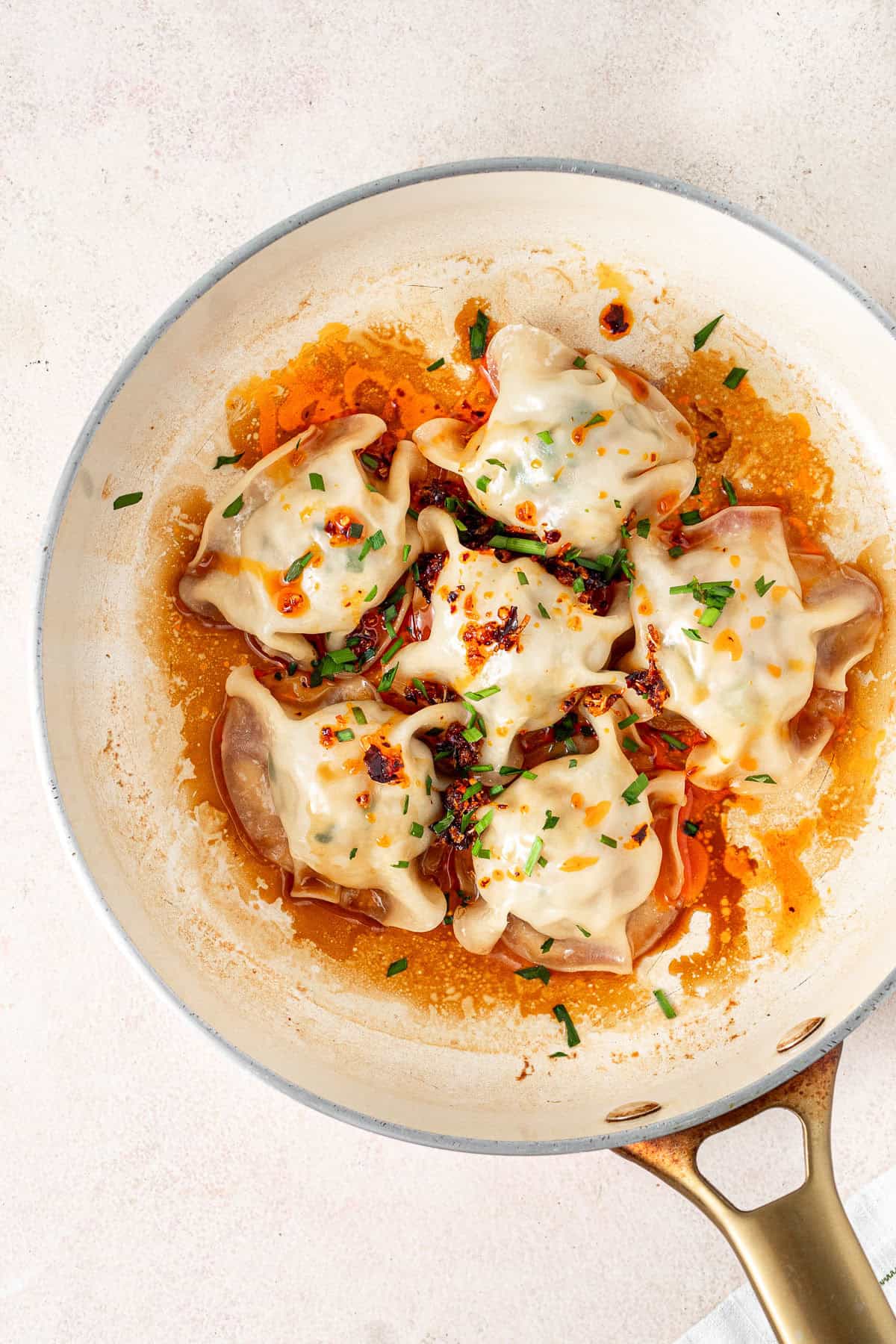
Step 5: Finish with chilli oil, soy sauce, and a sprinkle of extra chives. Enjoy immediately while hot.
👉 Don’t overcrowd the pan! You’ll need to cook these dumplings in batches for the best results as overcrowding can cause the wrappers to stick together and prevent the dumplings from steaming evenly.
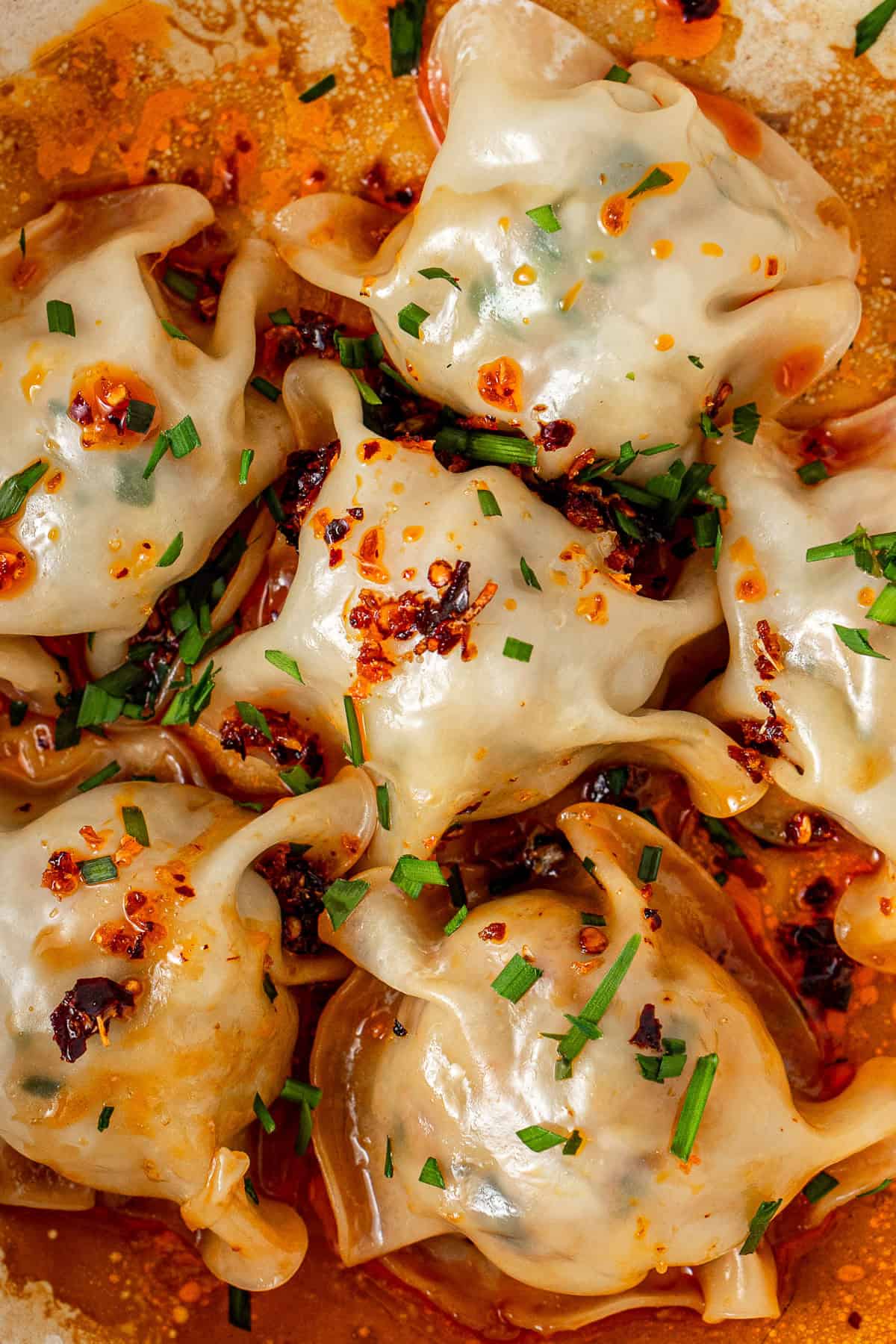
Serving Suggestions
These are best served straight from the pan while they’re hot and the wrappers still have that lovely steamed texture.
Instead of serving them with a dipping sauce, I just serve soy sauce and chilli oil over the top. You could definitely make a dumpling dipping sauce to go on the side however by mixing soy sauce, a dash of rice wine vinegar, and a little chilli oil to taste.
Storage Instructions
These dumplings are really best eaten fresh. That said, if you have leftovers, store them in an airtight container in the fridge for up to 2 days. Reheat in a pan over medium heat with a tiny splash of water and the lid on to warm them through without drying out the wrappers. You could microwave them but the texture will be a bit chewy and not the best.
I don’t recommend freezing these once cooked, but you can freeze the uncooked pork balls for up to a month. Just thaw in the fridge overnight before cooking.
Recipe FAQs
Absolutely. Chicken mince with ginger and garlic works really well as a swap. You could also try a prawn (shrimp) filling. Basically any dumpling filling combination that holds together well in balls will work for this method.
Yes! You can mix and roll the pork balls up to a day ahead and store them covered in the fridge until you’re ready to cook. This makes it even quicker to get dinner on the table.
This usually happens when the pan is overcrowded. Make sure you’re cooking in batches with enough space between the balls (the number per batch will depend on the size of your pan). Also make sure that your pan has a tight-fitting lid to trap the steam properly.
Also make sure to stop cooking as soon as the water has evaporated to ensure the bottom doesn’t burn and the wrappers don’t stick to the pan.
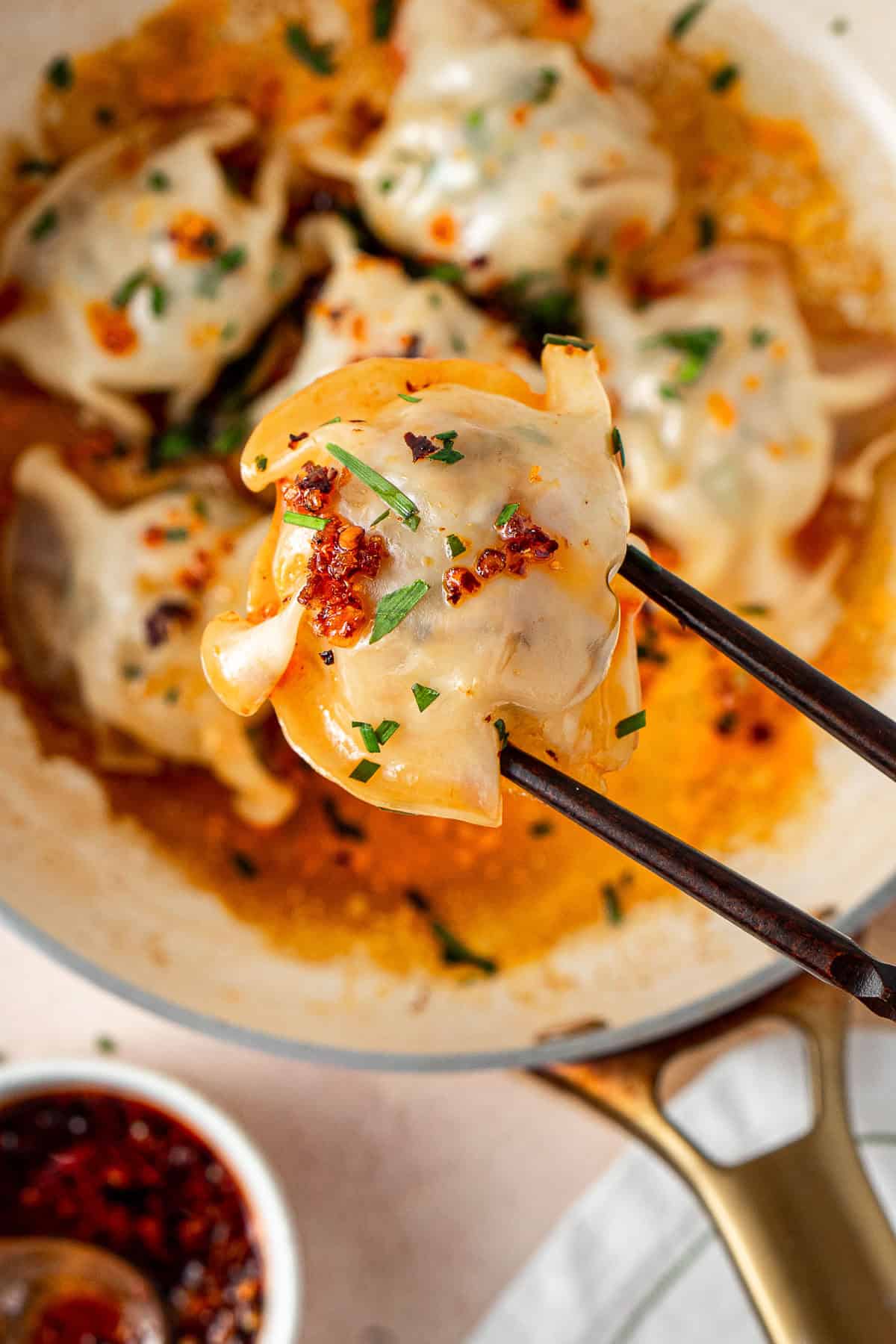
If you do make this recipe, please be sure to leave a comment and ⭐⭐⭐⭐⭐ rating below! And tag any of your creations on Instagram with @eightforestlane as I would love to see.
More Asian-Inspired Recipes:
Egg Fried Rice with Prawns
Vegetable Curry Puffs
Coconut Prawns
Steamed Mushroom Buns
Viral No Fold Dumplings
Ingredients
- 500 grams (1 lb) pork mince/ground pork
- ½ cup garlic chives finely chopped
- 1 cup white cabbage finely chopped
- ½ teaspoon minced ginger
- 2 cloves garlic minced
- 1 tablespoon soy sauce
- 1 teaspoon sesame oil
- ¼ teaspoon white pepper
- ¼ teaspoon salt
- 1 tablespoon canola oil for cooking
- 20 pieces round gyoza wrappers
To serve:
- Chilli oil
- Soy sauce
- Chopped garlic chives extra
Instructions
- In a large bowl, combine pork mince, chives, cabbage, ginger, garlic, soy sauce, sesame oil, white pepper and salt. Mix vigorously with your hands or a wooden spoon for 2–3 minutes until the mixture is well combined and sticky. This step helps the balls hold their shape during cooking.
- Using a heaped tablespoon of mixture per ball, roll into golf ball-sized portions with your hands. Set aside on a plate. You should get about 20 balls.
- Heat half the canola oil in a large non-stick frying pan with a tight-fitting lid over medium-high heat. Place balls evenly spaced in the pan. Let them cook undisturbed for 1–2 minutes until the bottoms are just starting to turn golden. Do not flip or move them.
- Working quickly, lay one gyoza wrapper over each ball like a blanket, gently pressing it down around the sides with your fingers.
- Pour about ½ cup of water around the edges of the pan, not directly onto the dumplings. Cover immediately with the lid, reduce heat to medium, and steam for 6–8 minutes.
- Once the water has fully evaporated and the wrappers look translucent and cooked through, remove the lid. If any water remains, cook uncovered for 1–2 more minutes. The pork is cooked when it reaches an internal temperature of 75°C (165°F). Repeat as necessary with the remaining dumplings.
- Serve straight from the pan or transfer to a plate. Drizzle with chilli oil and soy sauce and sprinkle with chopped chives. Enjoy immediately while hot
Video
Notes
Nutrition
Nutritional information is provided as a guide only and is calculated using automated online tools, therefore we cannot guarantee the accuracy. We encourage you to make your own calculations based on the actual ingredients used in your recipe.
Max says
Very easy, very tasty!!
Sally says
So happy to hear you enjoyed it!
Mitch says
Easy and tasty