

These Korean beef bowls are inspired by the flavour of classic bulgogi but can be on the dinner table in just 20 minutes! Made with an easy and flavourful sauce, this recipe uses budget-friendly beef mince to build a delicious and simple rice bowl perfect for weeknights.
⭐⭐⭐⭐⭐ made the recipe as written and included kimchi, fresh cucumbers and runny egg. my only addition was a drizzle of sweet & spicy chili sauce on top of bowl. simple and delicious. this meal will be in regular rotation in our home.– dm
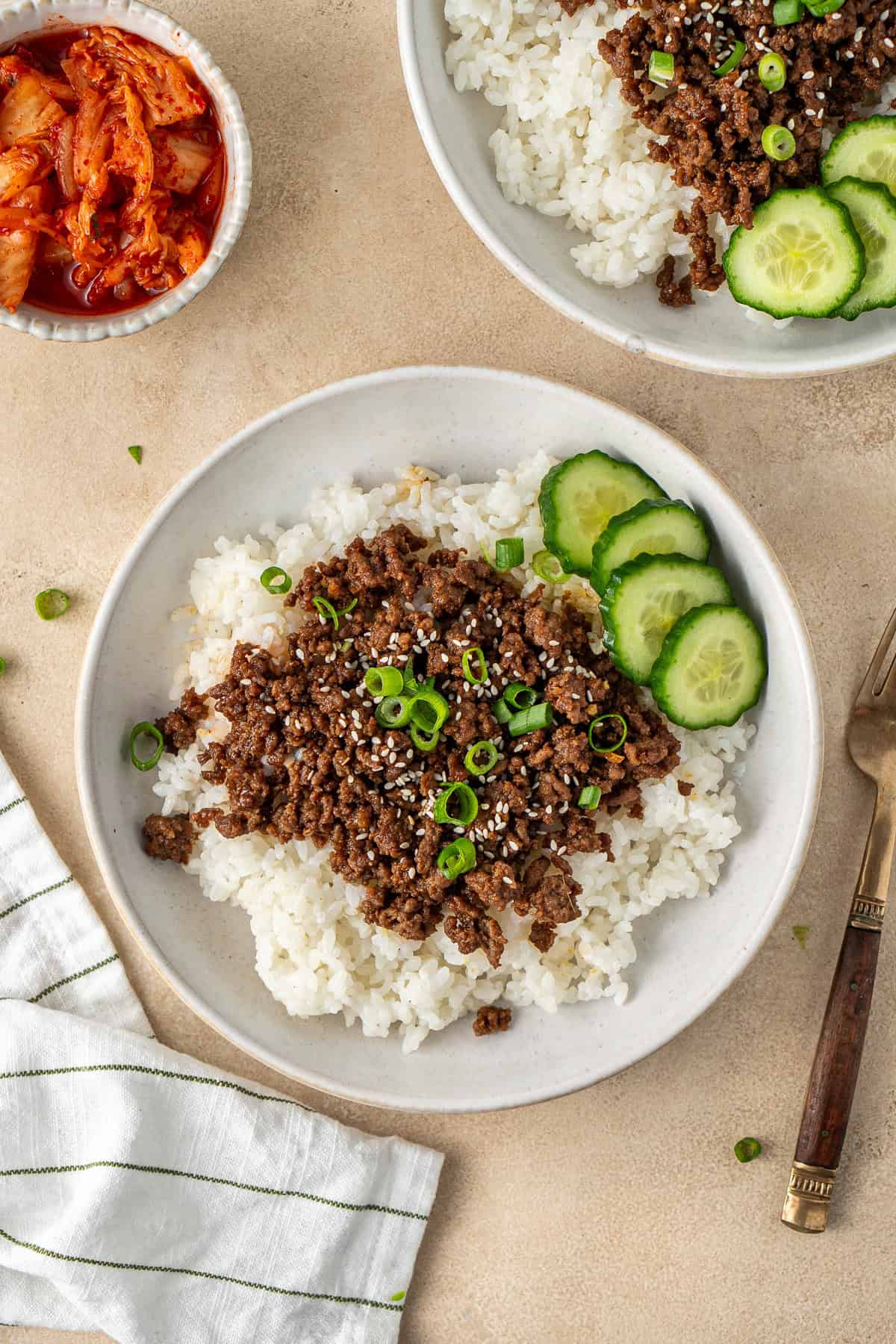
When thinking about budget meals, I always tend to come back to wanting to explore new and interesting dairy free recipes using beef mince.
I am sure we all have the go to recipes of spaghetti bolognese and cottage pie up our sleeves, or even making a Mexican-style mince to use in taco bowls or these viral hot honey sweet potato beef bowls. But what about when that all feels a little boring?
That’s where I have been obsessed with creating these Korean-inspired beef rice bowls. We’re taking the flavours of bulgogi which is marinated and grilled strips of beef and making it achievable in 20 minutes.
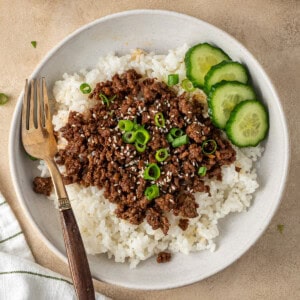
The sweet, sticky, garlicky, savoury beef is served over rice and served with some cucumber, sesame seeds and spring onion, bowl-style. I also can’t help myself and usually love to add a runny fried egg and some kimchi.
It’s such a simple and easy meal, it’s perfect for meal prep, and it has so much flavour! If you make Asian-style food a lot like I do, then you will probably find most of these ingredients in the pantry. I really think you’re going to love this one!
Key Ingredients
This recipe makes the most delicious and flavourful Korean-style beef that can be used as the base for an easy rice bowl perfect for busy nights when you don’t have much time to cook.
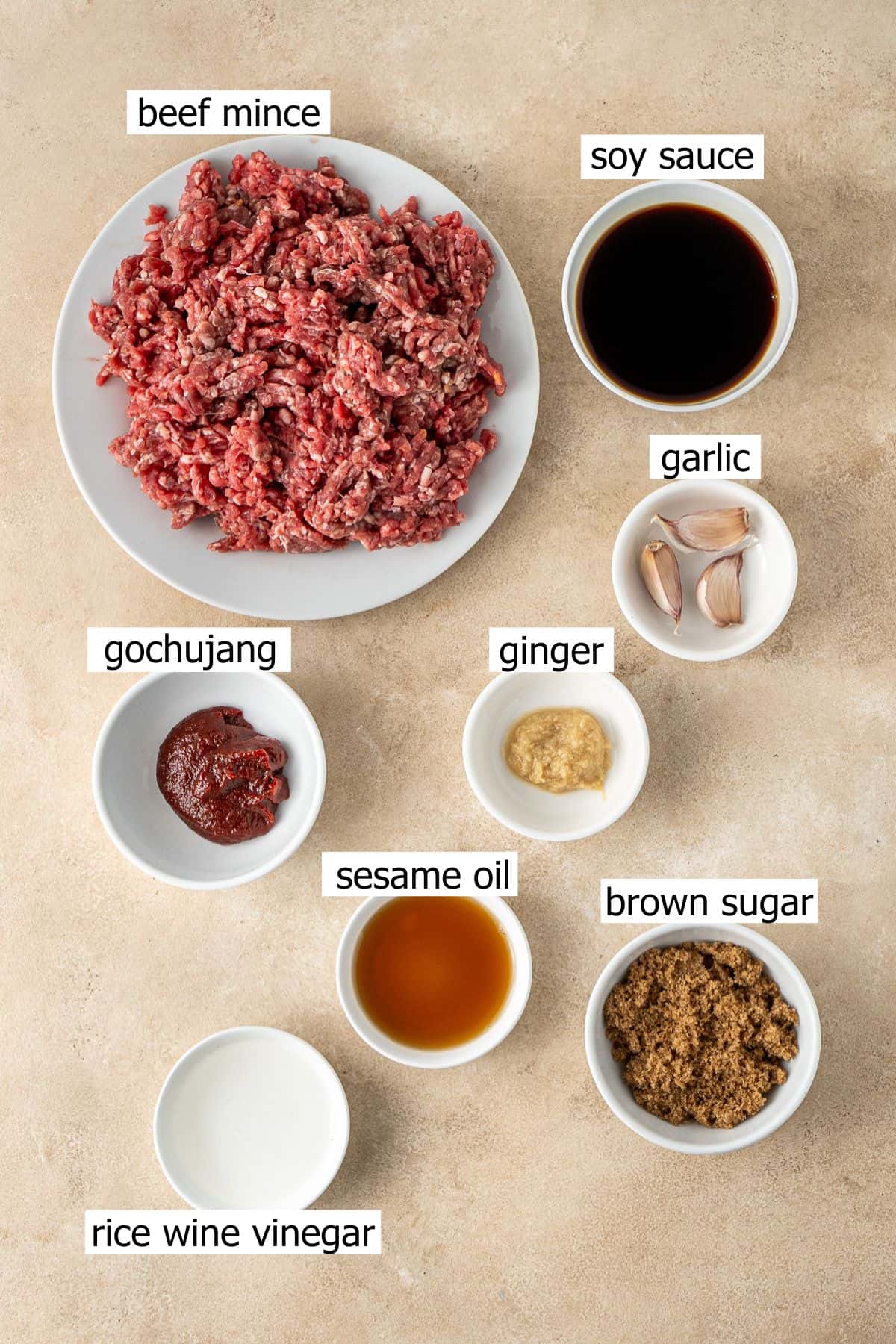
Note all ingredients and their quantities are laid out in the recipe card at the bottom of this post.
- Beef mince – also known as ground beef in other parts of the world. I use regular beef mince (80/20) usually as it’s a bit cheaper but feel free to use lean or extra lean beef mince if you prefer.
- Garlic – lots of garlic is essential to get that bulgogi sauce flavour.
- Ginger – I usually keep a jar of minced ginger in my fridge to make weeknight cooking a little easier but feel free to use freshly grated if you prefer.
- Soy sauce – the salty, umami base of the sauce.
- Brown sugar – adding essential sweetness and richness to the sauce.
- Sesame oil – really building out the depth of flavour.
- Gochujang – this fermented Korean red chilli paste adds a little bit of spice and lots of flavour to the sauce. With the quantity used, the beef remains quite mild, so if you’d like it spicier feel free to use more.
- Rice vinegar – gives the sauce a little tanginess that works to balance the sweet and salty flavours. It may not seem like a lot, but it plays a key role in the flavour profile. If you don’t have it, you can sub with apple cider vinegar.
You’ll Also Love: Crispy Rice Salad (Korean Inspired)
Step-By-Step Instructions
This is one of my favourite types of meals to make at the moment, as not only is it budget-friendly, it’s so quick and easy I can manage it on the lowest of energy days.
Whenever I am making a dish that I know I’ll be serving with rice, I like to always start by putting that on in my rice cooker so it can do its thing without me thinking about it and it will just be done by the time I am ready to serve. I like to serve the beef with short-grain/sushi rice.
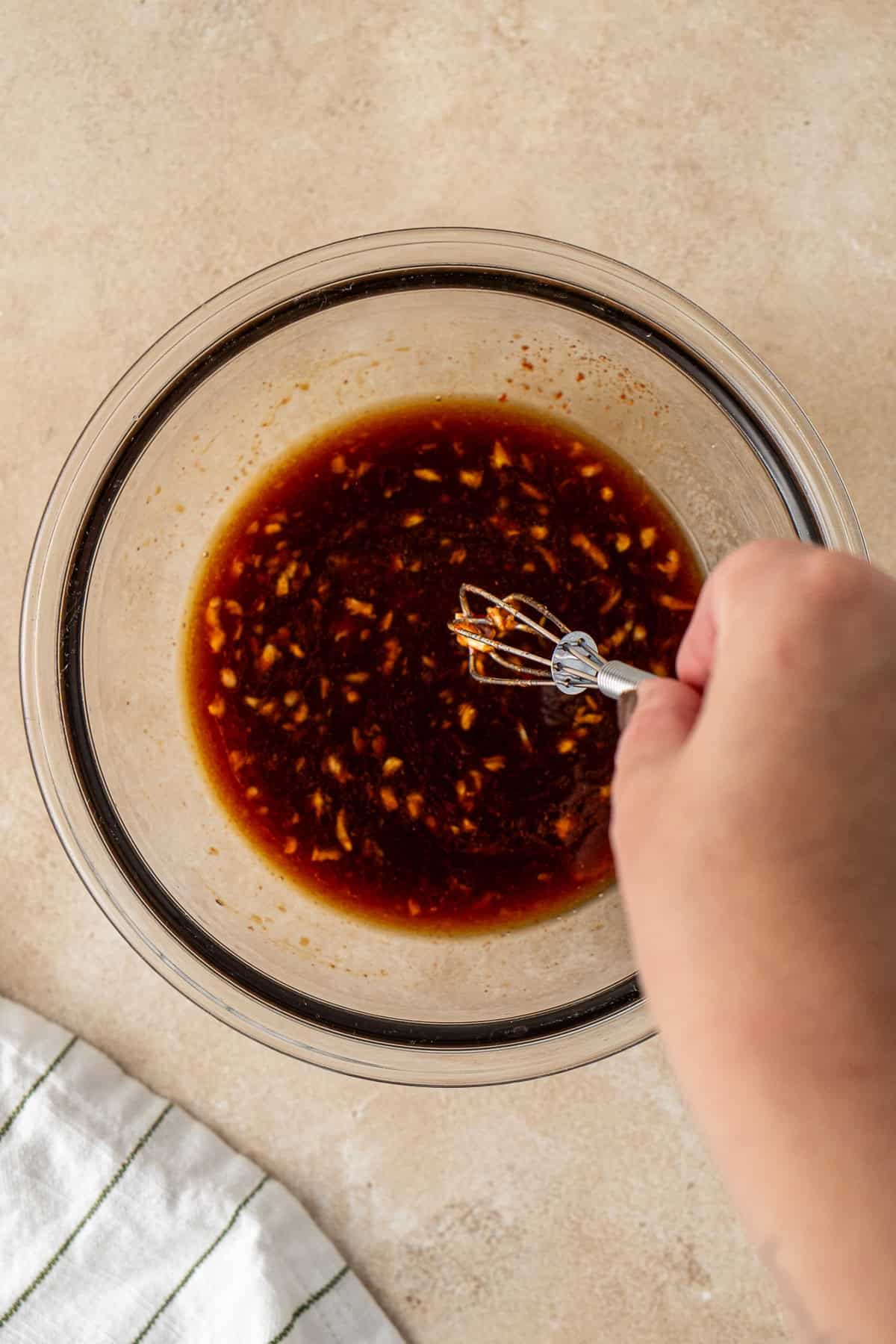
Step 1: Make the sauce by whisking together the soy sauce, brown sugar, sesame oil, gochujang, rice vinegar, garlic and ginger, and set it aside.
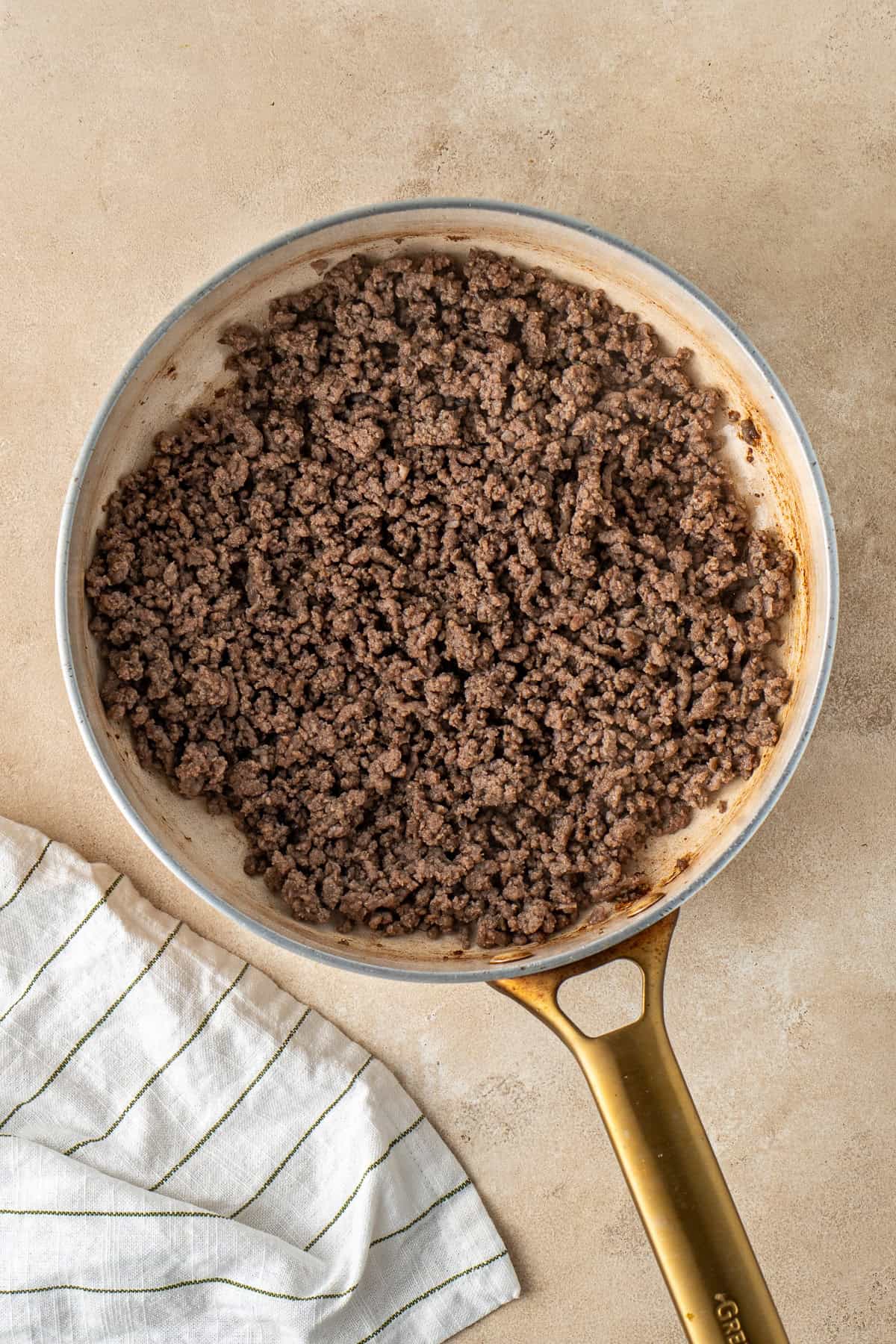
Step 2: Heat a little oil in a large frying pan and add the beef mince. Cook, breaking it up with a wooden spoon, until browned and cooked through.
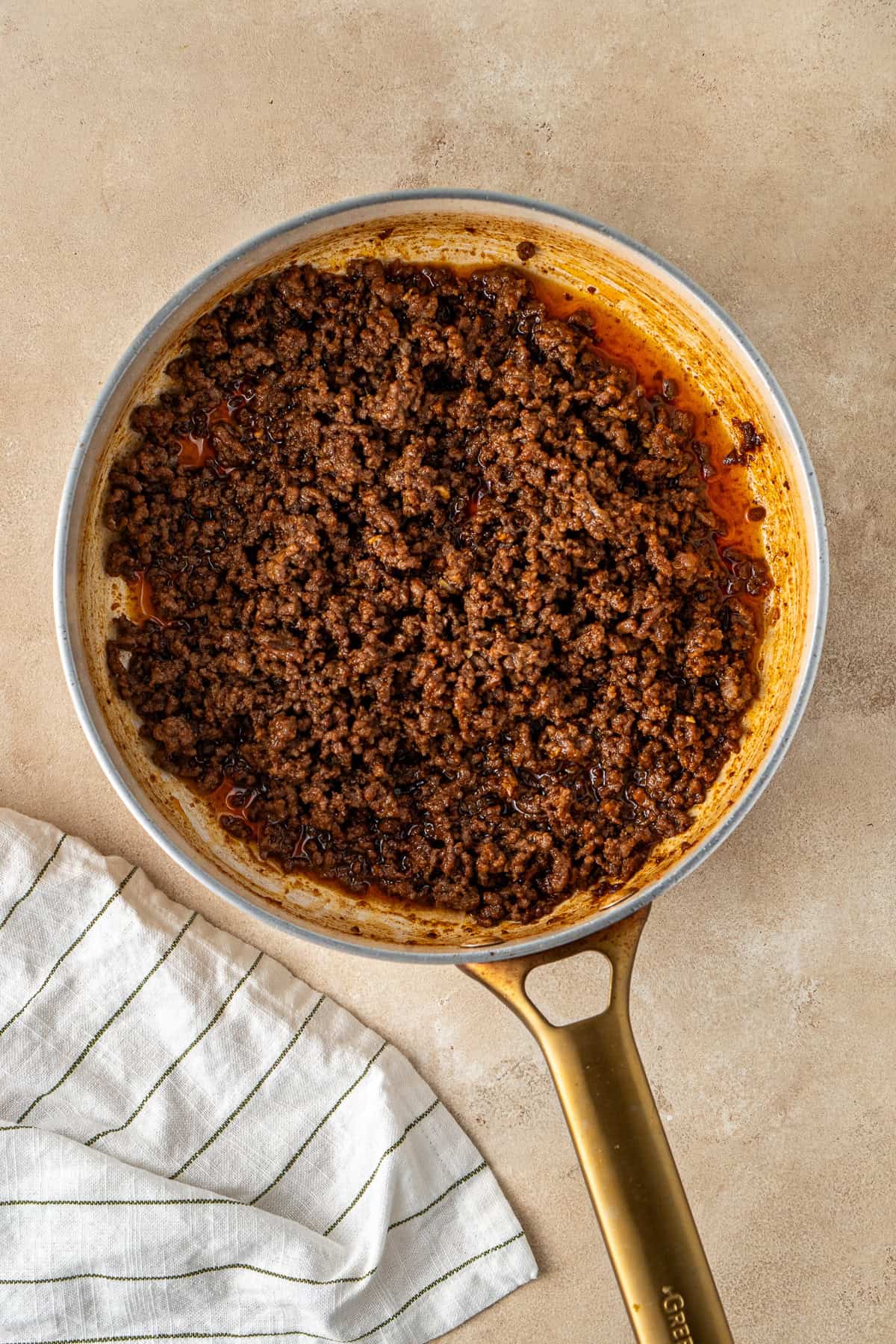
Step 3: Pour the sauce over the beef and stir it through. Cook for 2 to 3 minutes, until slightly thickened, the beef is fully coated and everything is super fragrant.
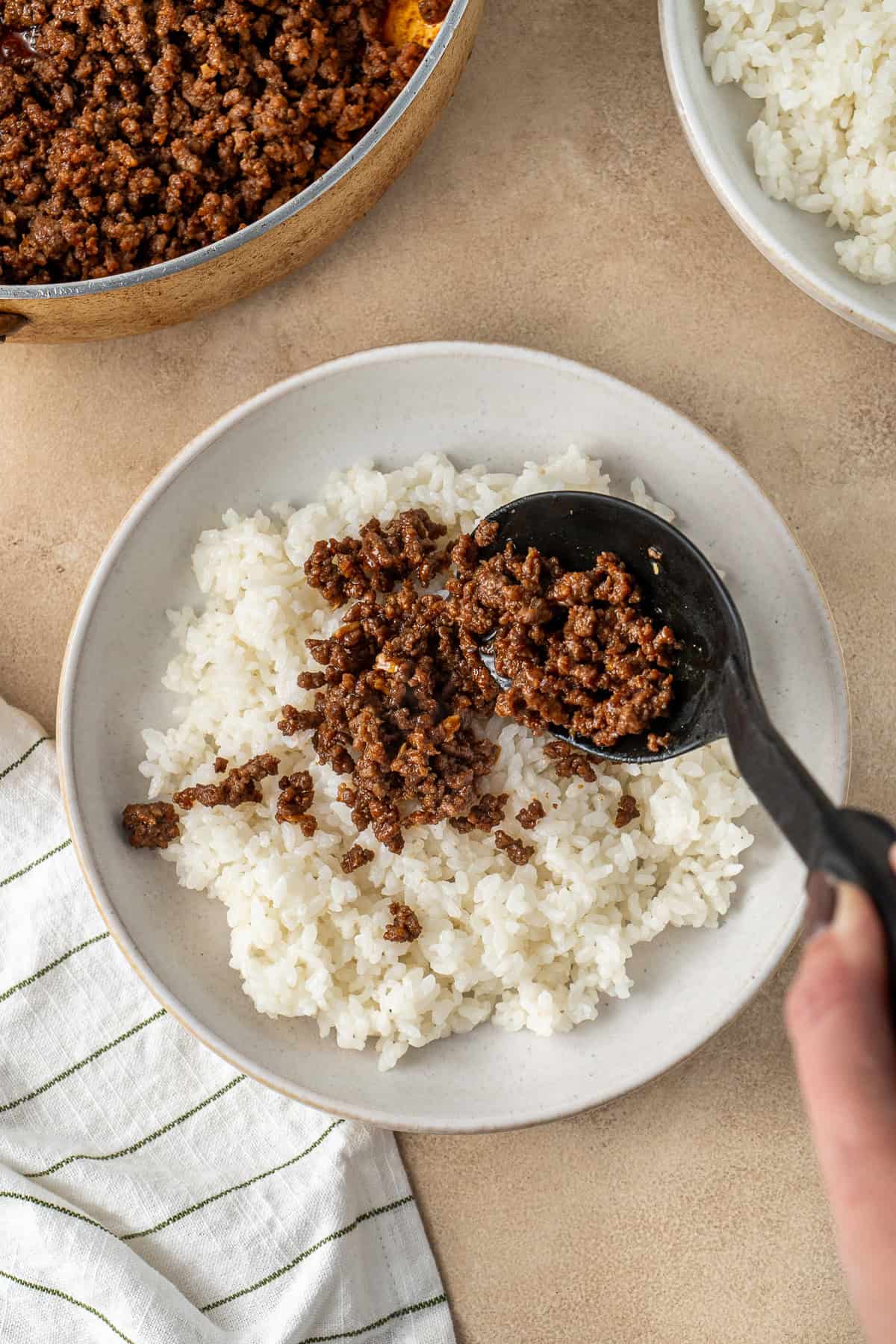
Step 4: Scoop the rice into bowls and top with the beef, then garnish with sliced spring onions and sesame seeds and add your toppings to serve.
👉 Take the time to brown the beef properly before the sauce goes in. Cook it until most of the liquid has evaporated and the mince starts to catch and colour in the pan. That little bit of browning is where a lot of the flavour comes from, and it helps the sauce cling to the beef and turn sticky rather than watery.
How to serve
To assemble the bowls, you can really keep them as simple as you like, or go that extra step.
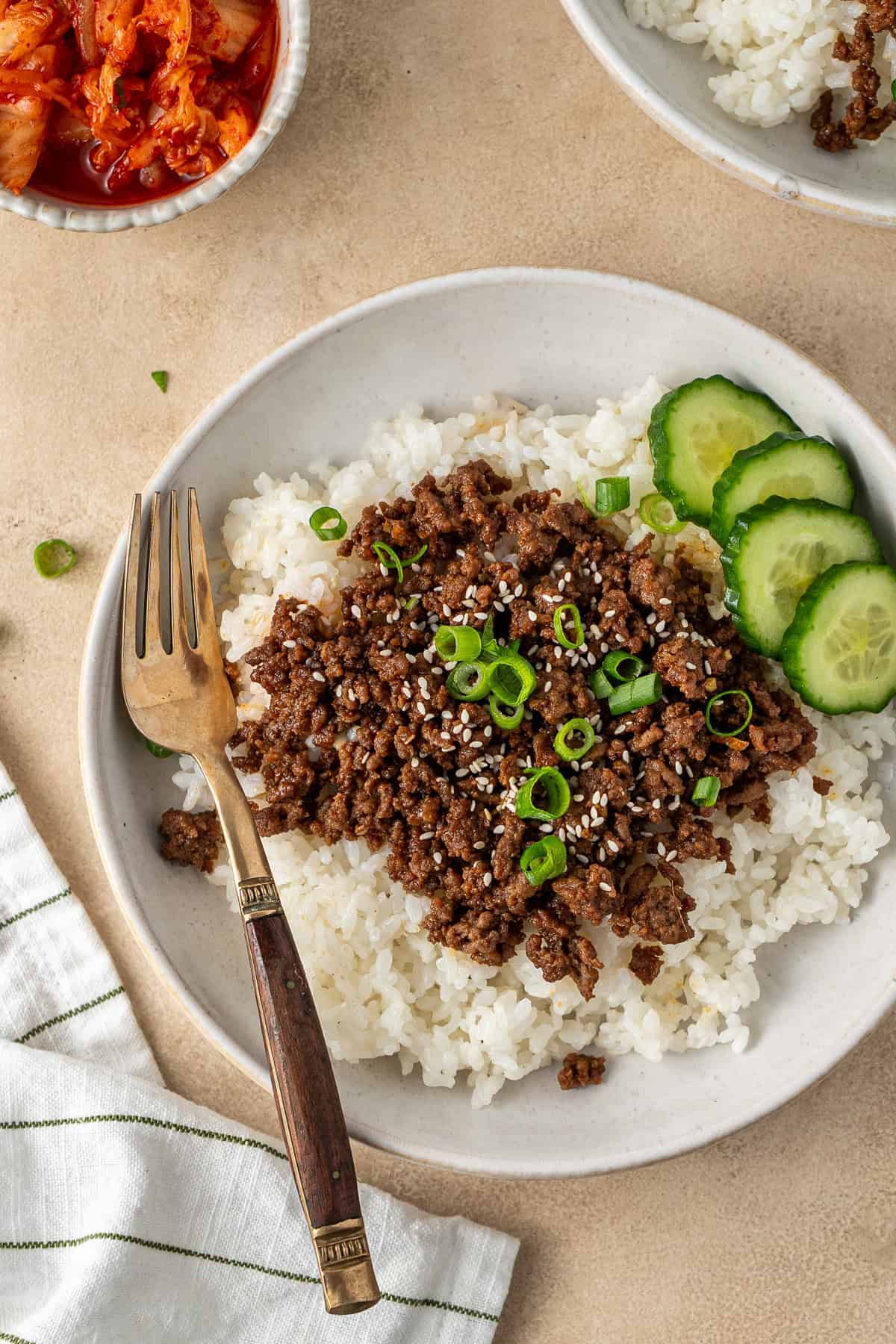
I like to start by adding the rice to the bowl, then top with a scoop of the beef. Garnish with sliced spring onions and sesame seeds.
For veggies, I usually go with simple sliced cucumber but you could definitely use the quick pickled cucumber from my hot honey chicken bowls which would be delicious.
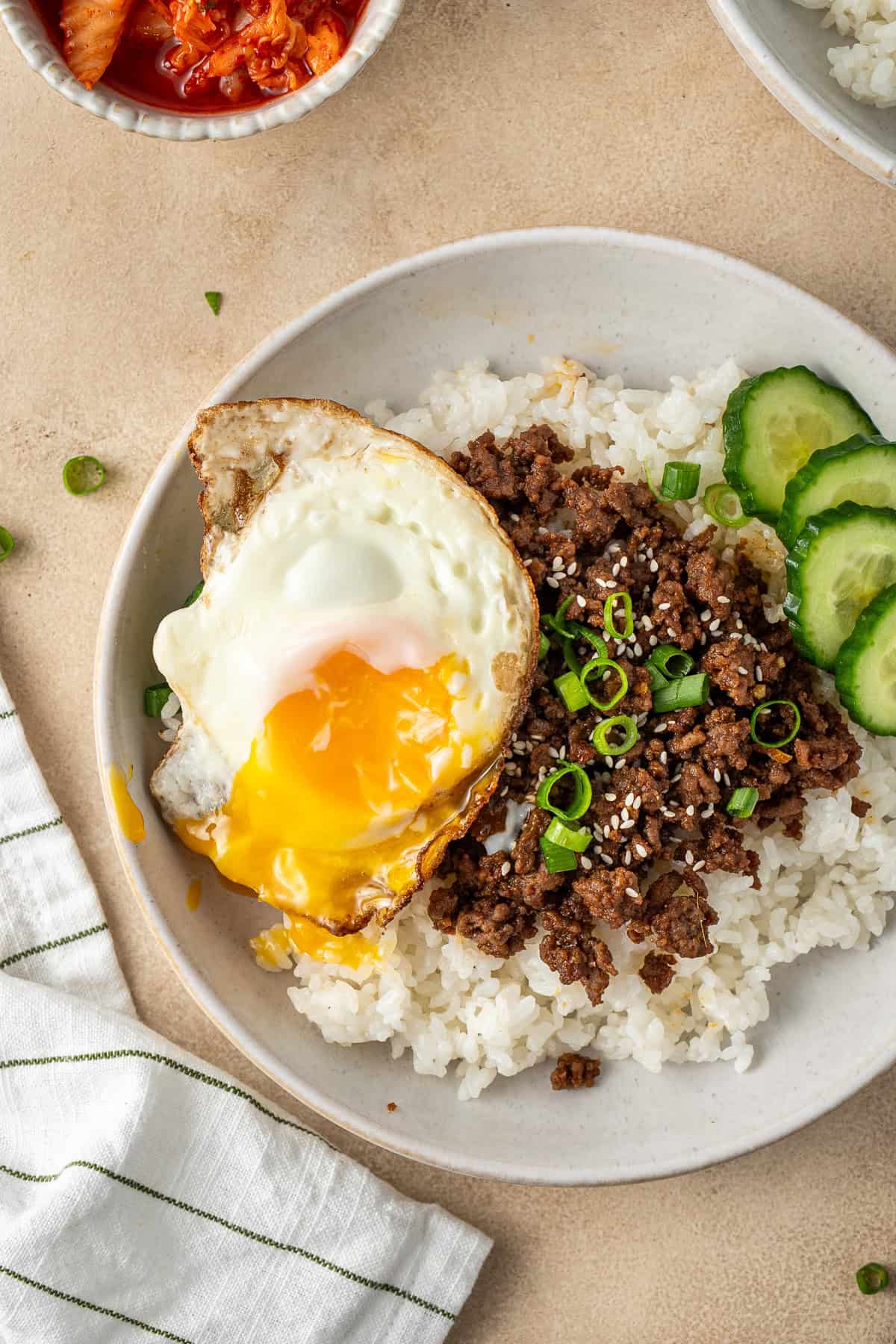
Finally, if you like you can fry an egg over hot heat so the base gets crispy and the yolk remains runny and serve this over the top.
I am also a huge fan of serving with a side of kimchi as it adds so much flavour and I am always looking for ways to incorporate more fermented foods into my diet.
Storage Instructions
This recipe is my kind of meal prep as it’s so quick and easy and the reheated version tastes just as good as fresh – I don’t feel you lose anything by making it ahead.
Store the cooked beef mince and rice in airtight containers in the fridge for up to 4 days. Keep the toppings (like sliced cucumber and spring onions) separate, and add them after reheating.
You can also freeze the cooked beef (and the rice) for up to 3 months.
To reheat, warm the beef in the microwave or in a frying pan over medium heat until heated through. The rice is best reheated in the microwave, stirring occasionally until hot and steaming.
Recipe FAQs
Everyone’s taste and tolerance to spice is different, however these bowls are quite mild as the spice is balanced by the sweetness in the sauce. If you are super sensitive to spice, you can use less gochujang or leave it out entirely, otherwise feel free to increase the quantity for a spicier beef.
You can usually find gochujang in most supermarkets, but if you can’t find it or don’t have it on hand you can use a chilli garlic sauce or sriracha instead. The flavour will be a bit different but it will still be delicious.
Depending on the brand, gochujang may not be gluten free as some brands contain wheat and barley products so definitely check the label to be sure. The O’Food brand one I buy from Woolworths looks to be fermented with brown rice instead of wheat so should be gluten free but definitely do your research as if you’re celiac, it can be best to avoid it if you’re unsure.
You can swap it with a gluten free chilli sauce you trust, and make sure to use gluten free soy sauce or tamari.
If you do make this recipe, please be sure to leave a comment and ⭐⭐⭐⭐⭐ rating below! And tag any of your creations on Instagram with @eightforestlane as I would love to see.
More Quick and Easy Bowl Recipes:
Chicken Teriyaki Bowls
Quick and Easy Spicy Prawn Rice Bowls
Chipotle Chicken Bowls
Burger Bowls
Korean Beef Bowls (Quick and Easy!)
Equipment
Ingredients
- 1 tablespoon canola oil
- 500 grams (1 lb) beef mince/ground beef
For the sauce:
- ¼ cup soy sauce
- 2 tablespoons brown sugar
- 1 tablespoon sesame oil
- 1 tablespoon gochujang Korean chilli paste
- 2 teaspoons rice wine vinegar
- 3 cloves garlic finely minced
- 1 teaspoon fresh ginger grated
To serve:
- 2 cups cooked white rice jasmine or short grain
- spring onions
- sesame seeds
- ½ cucumber thinly sliced
- Kimchi optional to serve
- Fried egg optional
Instructions
- In a small bowl, whisk together the ¼ cup soy sauce, 2 tablespoons brown sugar, 1 tablespoon sesame oil, 1 tablespoon gochujang, 2 teaspoons rice wine vinegar, 3 cloves garlic and 1 teaspoon fresh ginger. Set aside.
- Heat the 1 tablespoon canola oil in a large pan over medium-high heat. Add the 500 grams beef mince/ground beef and cook, breaking it up with a wooden spoon, until browned and cooked through.
- Pour the sauce over the beef and stir to coat. Simmer for 2–3 minutes until slightly thickened and fragrant.
- To assemble the bowls, scoop 2 cups cooked white rice into bowls and top with the beef. Garnish with spring onions and sesame seeds. Serve with sliced ½ cucumber, Kimchi and a Fried egg on top if desired.
Video
Notes
Nutrition
Nutritional information is provided as a guide only and is calculated using automated online tools, therefore we cannot guarantee the accuracy. We encourage you to make your own calculations based on the actual ingredients used in your recipe.



DM says
Made the recipe as written and included kimchi, fresh cucumbers and runny egg. My only addition was a drizzle of sweet & spicy chili sauce on top of bowl. Simple and delicious. This meal will be in regular rotation in our home.
Sally says
Sounds perfect! Glad you enjoyed the recipe 🙂
Mae B. says
Good recipe, alibet dry. So, we added Asian Sesame with Ginger & Soy dressing and Marinade (from Kens Steak House) on top of the bowls and it came out perfect!