
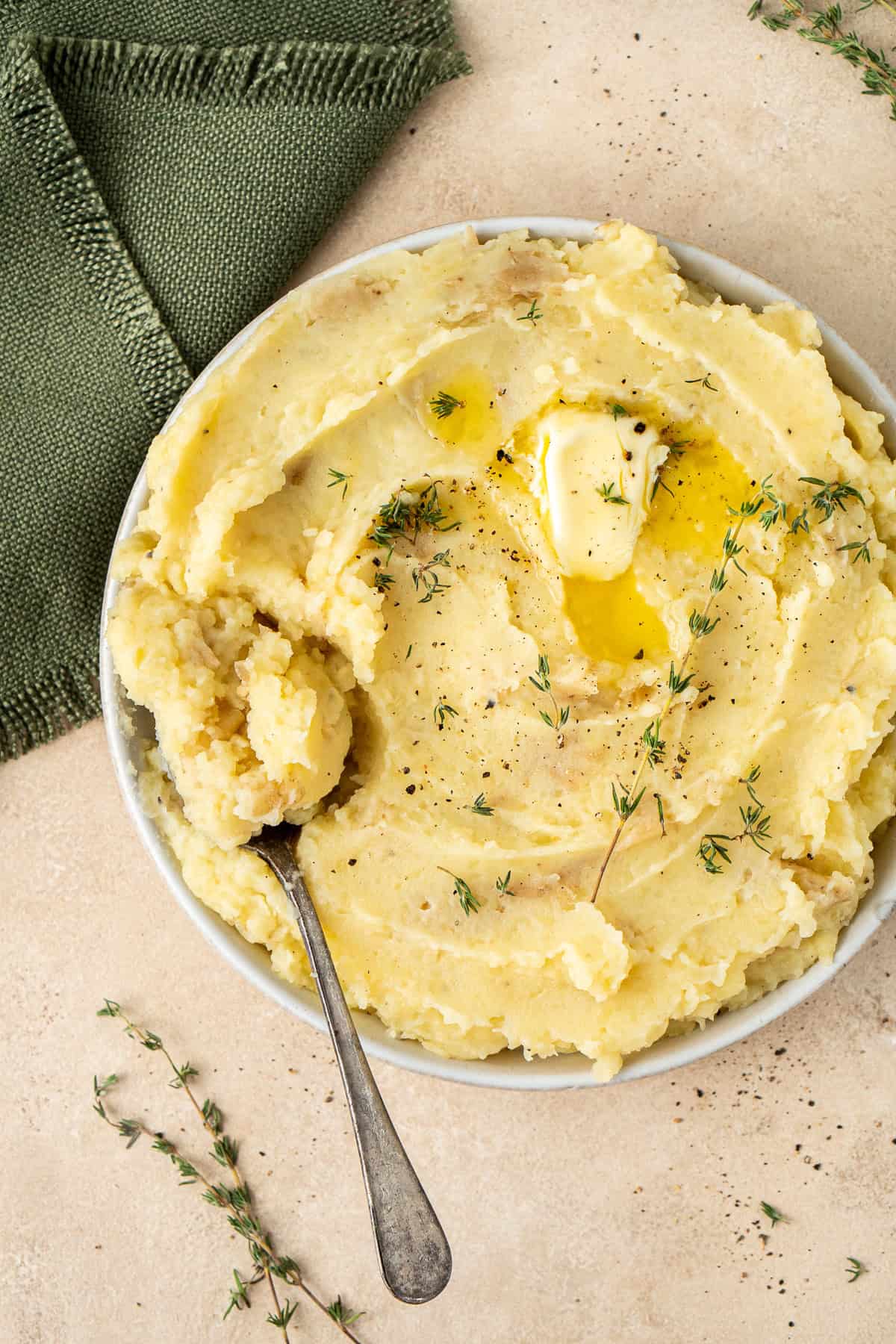
These creamy dairy free mashed potatoes are so good, you honestly won’t miss the dairy at all! Made with oat milk and vegan butter, this easy dairy free mashed potato recipe is the perfect side to pair with just about anything!
Try it with air fryer pork chops or slow cooker corned beef, with a side of air fryer broccolini for a complete meal.
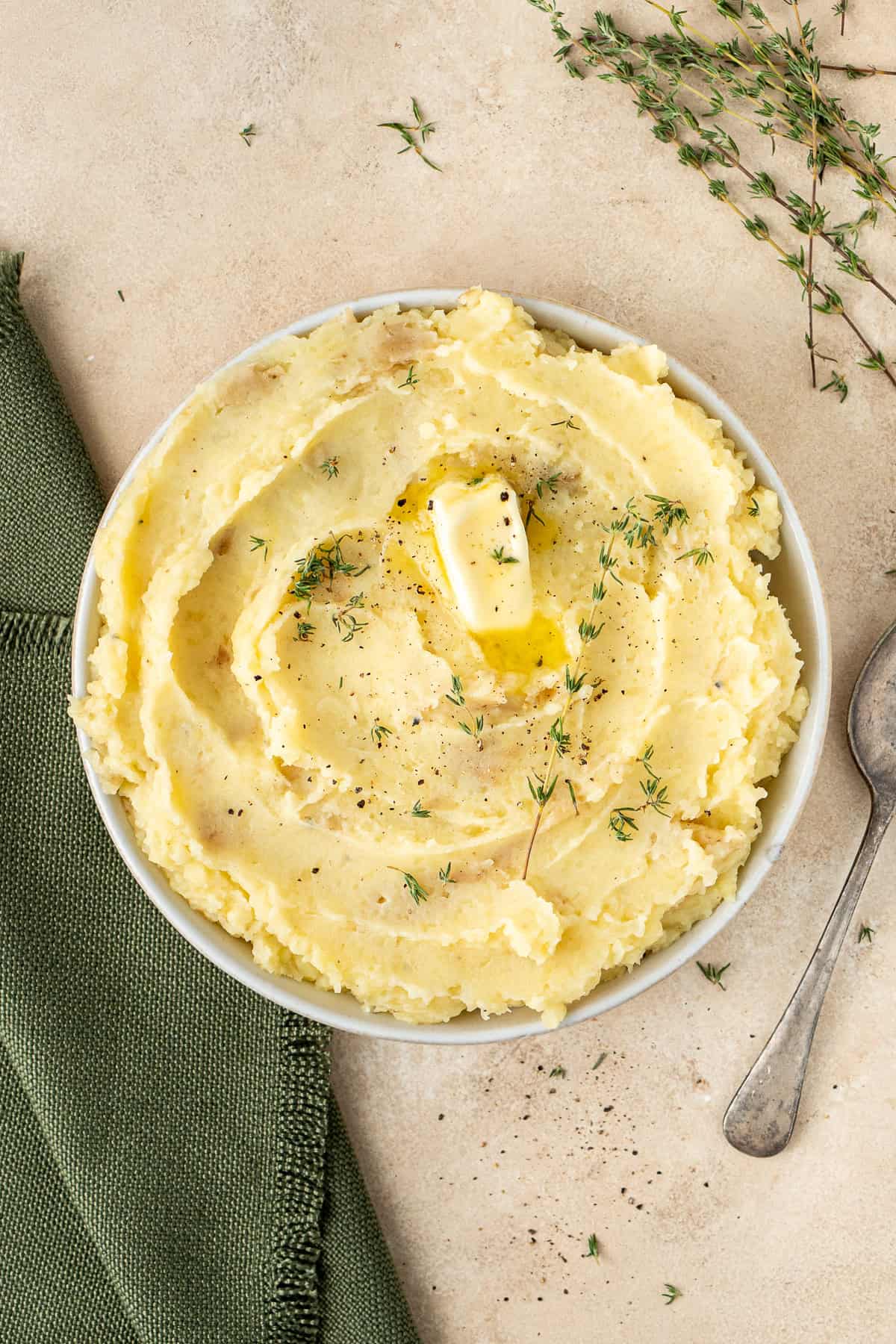
The humble mashed potato is one of the best staple side dishes around. I grew up on a classic Australian diet of meat and three veg, and more often than not, that veg included a big scoop of creamy mash.
Over the years, especially since going dairy free, I’ve made countless versions of mashed potatoes as it’s one of those foods I can never eat unless I make it myself. But honestly? The best ones that I will happily eat straight from the pot with a spoon are always the simplest.
I call this my rustic dairy free mashed potato, because I LOVE a mash with texture. I like the skins left on, and I’m absolutely fine with a few lumps. I’ve never owned a potato ricer, and I’m not about to start whipping mash with a hand mixer or immersion blender either.
That said, if you prefer super smooth mash, this recipe will still work beautifully, just peel your potatoes and mash them to your preferred texture. Either way, this is going to be a regular on your weekly meal rotation (it certainly is for me!).
Key Ingredients
You don’t need much to make dairy free mashed potato, but the ingredients below are going to give you that rich, creamy texture and buttery flavour that makes mash so irresistible.
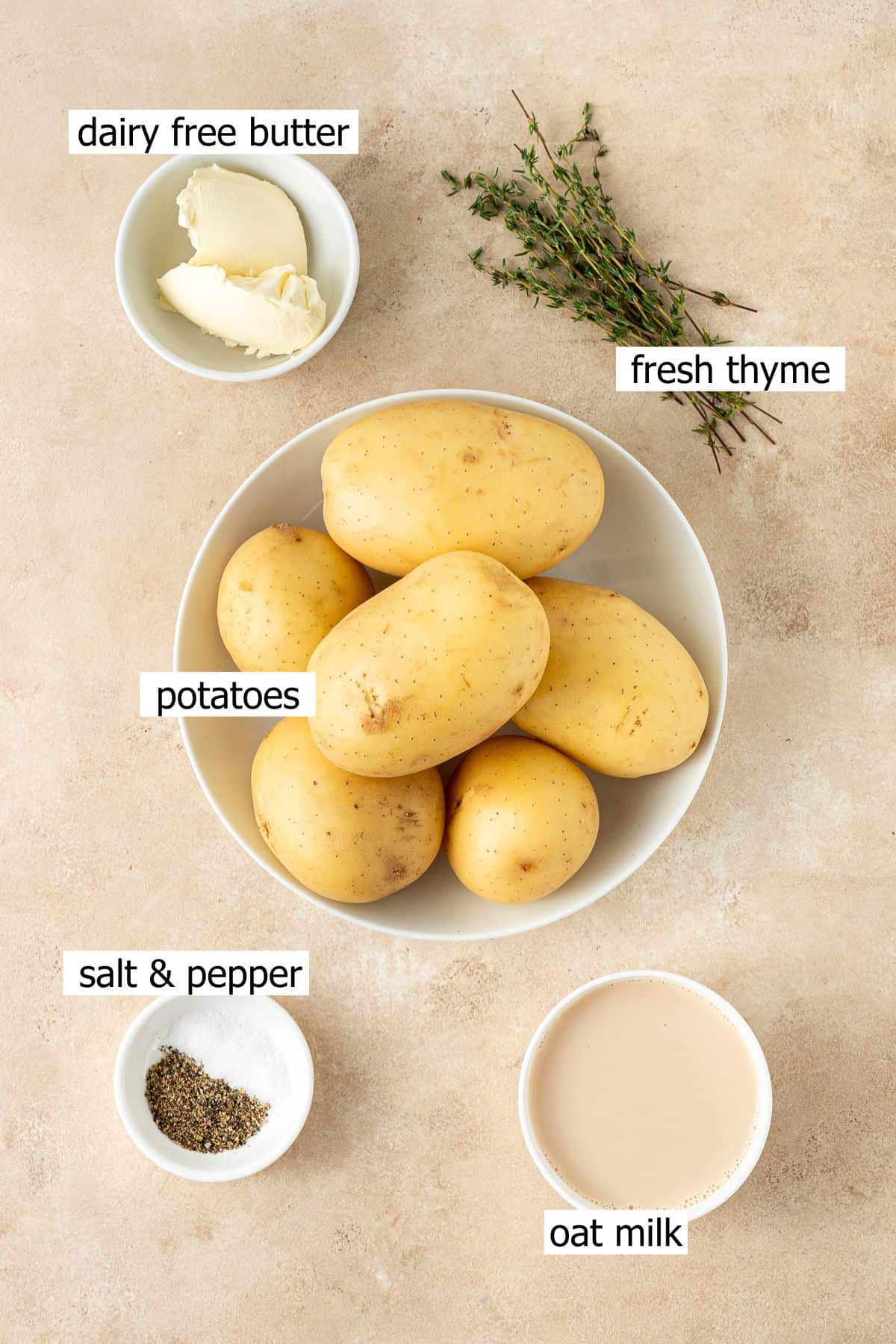
Note all ingredients and their quantities are laid out in the recipe card at the bottom of this post.
- Potatoes – Any all-rounder variety works best for mash.
- In Australia, go for brushed potatoes or white washed potatoes. I usually use white washed so I can leave the skins on, but if you’re using brushed, it’s best to peel them.
- In the US, Yukon Gold potatoes are the best for flavour and creaminess, or you can use Russet potatoes if you prefer a fluffier mash (just be sure to peel them as the skins are quite tough).
- Oat milk – Instead of regular milk or cream, oat milk adds creaminess and subtle flavour. You could also use soy or almond milk, but oat milk is my go-to for taste and texture. Just make sure it’s unsweetened!
- Vegan butter – Adds that classic buttery flavour. I love Nuttelex Buttery (which is an Australian product), and if you’re in the US, Earth Balance is a great equivalent.
- Fresh herbs – optional, but mashed potatoes work well with some fresh chopped thyme, chives or parsley to add a bit of extra flavour.
Equipment and Tools
- Potato masher – there are so many different types and shapes available so it might take some experimentation to find your perfect one. This one is very similar to the one I have and I really like it as it’s comfortable and easy to use and I find it gives me the texture mash I like.
- Large saucepan or stock pot – a large size saucepan should be big enough for this quantity of mash, but you can use a larger one if you need to double the recipe.
Step-By-Step Instructions
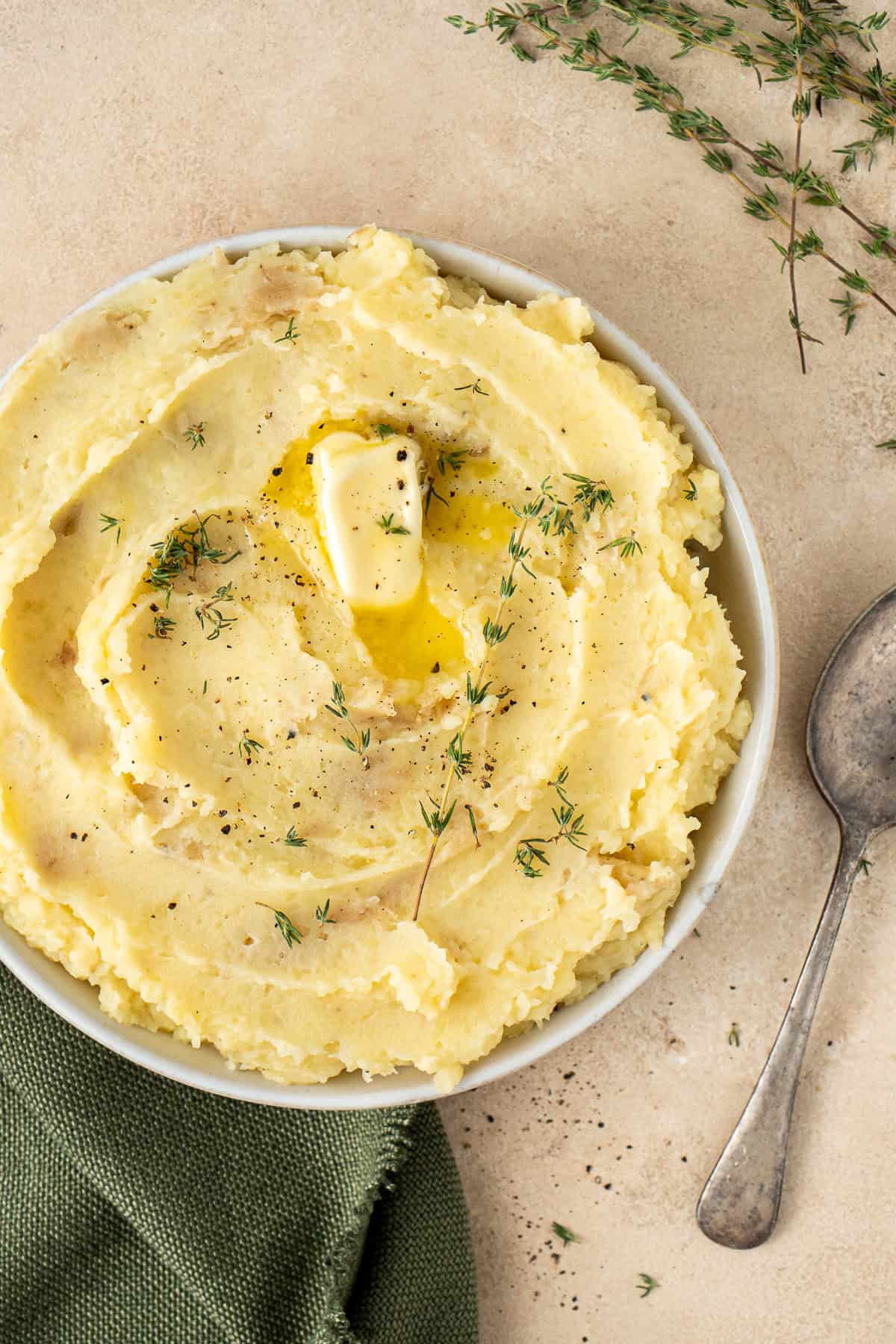
Making dairy free mashed potatoes is such a simple thing, but there are a few little things as part of the process that are going to ensure you get the best taste and texture with your mash every single time.
Step 1: Start by making your decision on if you want to peel your potatoes or keep the skin on. If you’re keeping the skin on, give them a good wash to make sure there is no residual dirt on the skins.
Step 2: Chop the potatoes into even sized chunks – approximately 3 – 4 cm pieces. This is going to ensure your potatoes cook evenly which is one of those small things that is going to greatly improve the overall texture of your mash.
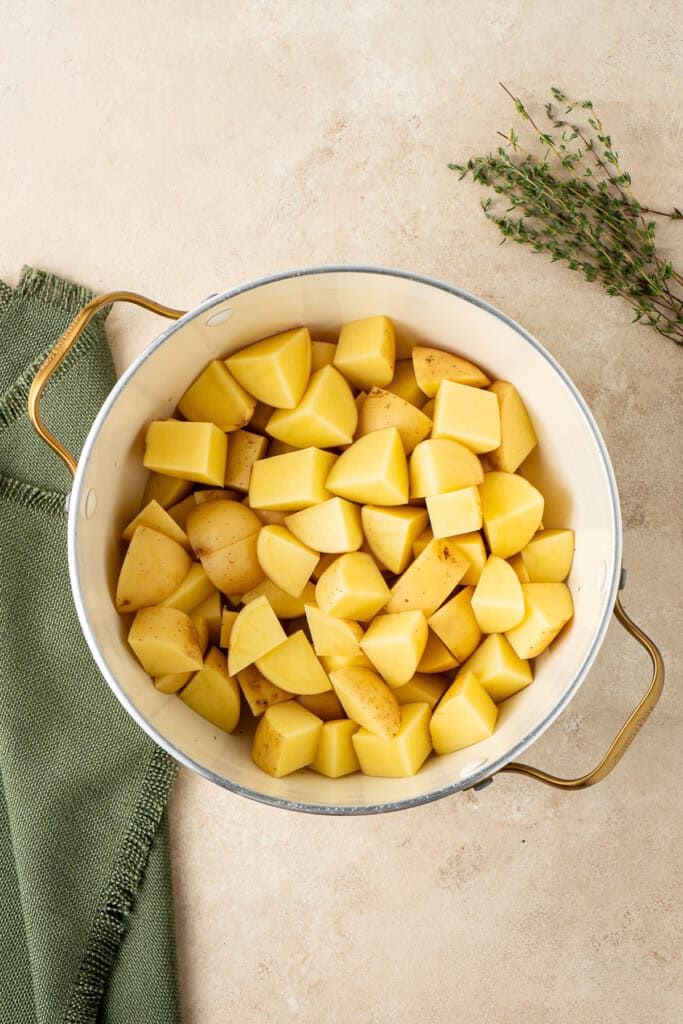

Step 3: Place the chopped potatoes in a large pot and cover them with cold water. Bring to a boil over medium-high heat, then reduce to a simmer and cook for 15–20 minutes or until a fork easily pierces through the potatoes. You want them to be soft but still holding their shape. If they are turning to mush and falling apart then they are overcooked and this is going to result in watery mash.
Step 4: Drain the potatoes well in a colander and return them to the pot. Let them sit for 1 – 2 minutes as the excess steam will help dry the potatoes which again is another thing preventing the mash ending up watery.
Step 5: Next, I recommend mashing the potatoes first, before adding the remaining ingredients. This is a trick I learned on Instagram and it helps to prevent the mash from ending up gummy. So if you’ve ever had that problem with mash before, make sure to mash first THEN add in your liquids.


Step 6: Once you have your mash, add in the oat milk, vegan butter, salt, and black pepper to the potatoes. Mash again until creamy. I usually switch to a wooden spoon to finish to really make sure everything is creamy and combined. You can give it a taste and adjust seasoning if needed and add a splash more oat milk if it’s not feeling creamy enough.
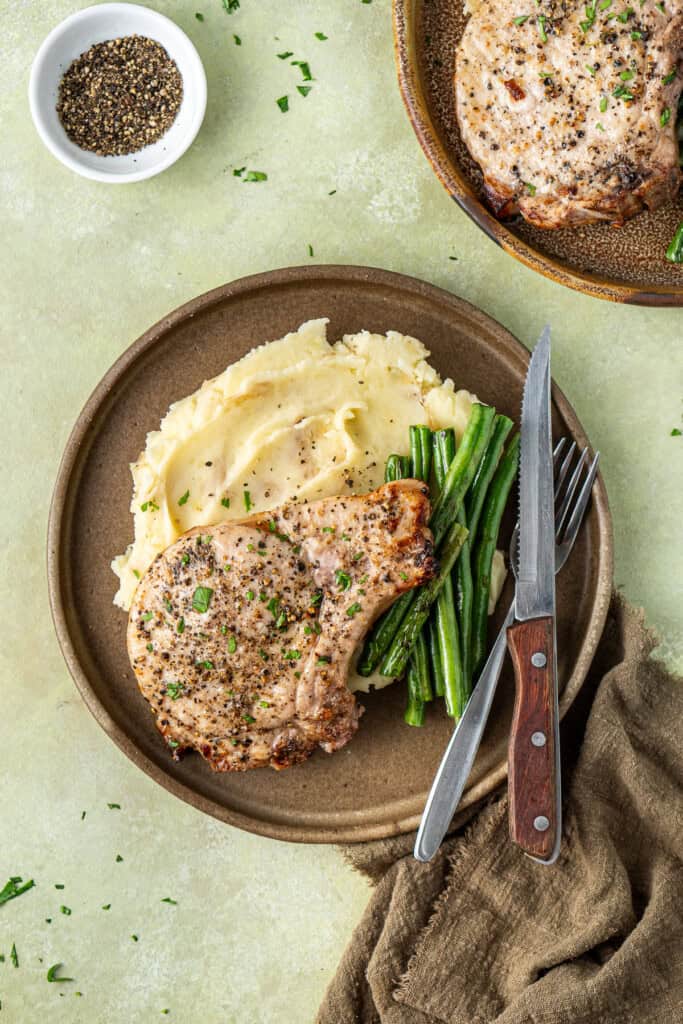
Step 7: Garnish your potatoes with fresh herbs for that extra flavour, and serve warm. I love to add it to a plate with a protein (such as air fryer lamb chops) and some green veg for a super simple weeknight meal that’s also so satisfying and healthy.

How to Store Leftover Dairy Free Mashed Potatoes
Fridge: Let your mash cool completely, then store in an airtight container in the fridge for up to 4 days.
Freezer: You can freeze mashed potatoes! Flatten into a freezer-safe ziplock bag to remove air, then freeze for up to 3 months.
To reheat: Gently reheat in a saucepan over low heat, adding a splash of oat milk or a little vegan butter to make it super creamy. Alternatively, microwave in short bursts, stirring often, until hot.
Recipe FAQs
Oat milk is my favourite for flavour and texture, but soy, almond, or any plant-based milk will work. Just be sure it’s unsweetened and unflavoured!
While I recommend using vegan butter for the best taste, if you need to substitute it, you can use extra oat milk, olive oil, or even coconut cream for richness. Start with a smaller quantity and add it to taste.
Yes you can! Just swap the potatoes for sweet potatoes and adjust the amount of oat milk as needed, as sweet potatoes do tend to be softer and less starchy. I also make this often with pumpkin or even a combination of pumpkin or sweet potato and regular potatoes to make ‘golden mash’.
Yes! While vegan butter gives the best flavour, you can use olive oil, extra oat milk, or even coconut cream. Start small and add to taste.
If you do make this recipe, please be sure to leave a comment and ⭐⭐⭐⭐⭐ rating below! And tag any of your creations on Instagram with @eightforestlane as I would love to see.
More potato side dish recipes:
The BEST Dairy Free Potato Salad
Crispy Salt and Vinegar Smashed Potatoes
Air Fryer Potatoes
Oven Baked Potato Wedges with Herb Mayo

Dairy Free Mashed Potatoes
Ingredients
- 1 kilogram potatoes washed
- ½ cup oat milk
- 2 tablespoons vegan butter
- ¼ teaspoon salt
- ¼ teaspoon black pepper
- Fresh chopped thyme chives or parsley, optional
Instructions
- Optionally peel the 1 kilogram potatoes or you can leave the skins on (as I usually do). Cut the potatoes into evenly sized chunks (about 3–4 cm pieces).
- Place the chopped potatoes in a large pot and cover them with cold water. Bring to a boil over medium-high heat, then reduce to a simmer and cook for 15–20 minutes or until a fork easily pierces through the potatoes.
- Drain the potatoes well and return them to the pot. Let them sit for 1–2 minutes to release excess steam (this helps prevent watery mash).
- Mash the potatoes with a potato masher. Add the ½ cup oat milk, 2 tablespoons vegan butter, ¼ teaspoon salt, and ¼ teaspoon black pepper to the potatoes. Mash again until creamy.
- If the mash is too thick, add a splash more oat milk until you reach your desired consistency. Taste and adjust seasoning if needed.
- Sprinkle with Fresh chopped thyme, chives, or parsley if using and serve warm.
Nutrition
Nutritional information is provided as a guide only and is calculated using automated online tools, therefore we cannot guarantee the accuracy. We encourage you to make your own calculations based on the actual ingredients used in your recipe.
Never wonder what's for dinner again
Get a brand new dairy free meal plan every week, plus members only recipes and the whole of Eight Forest Lane with no ads. The planning is done, you just shop and cook.
Start your 7 day free trial →